
Afghanistan
National Flag of Afghanistan

🇦🇫 Country Profile: Afghanistan
🌍 Introduction
Afghanistan is a landlocked country located at the crossroads of Central and South Asia, known for its rugged mountains, ancient cities, and deep historical roots. Positioned along historic trade routes, it has long served as a meeting point of cultures, languages, and civilizations. Its geography ranges from high mountain ranges and plateaus to deserts and fertile valleys, creating diverse natural and cultural landscapes.
📌 General Overview
Official Name: Islamic Emirate of Afghanistan.
Capital: Kabul.
Official Languages: Pashto and Dari.
Government Type: Islamic Emirate (current de facto administration).
Currency: Afghan Afghani (AFN).
Time Zone: Afghanistan Time (AFT).
🗺️ Country-Specific Maps
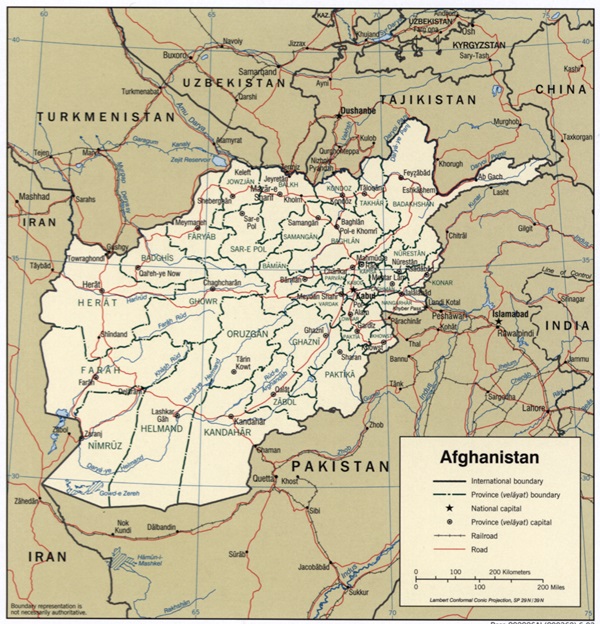
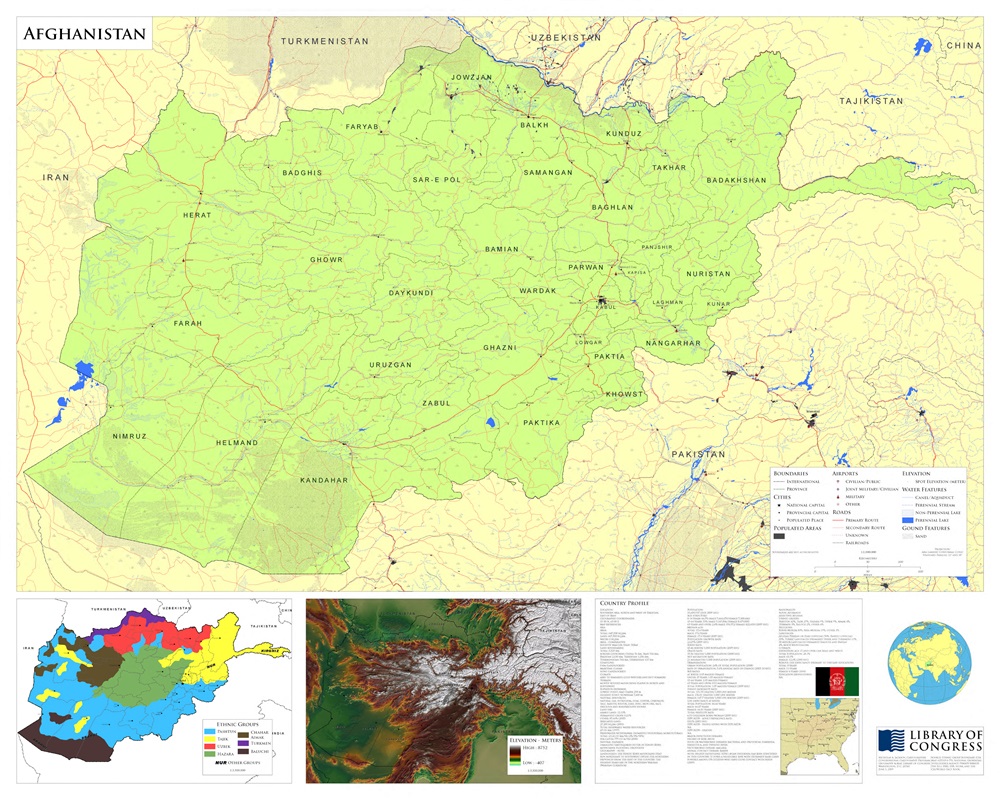
Political maps show provinces, districts, and major cities. Topographic maps highlight the Hindu Kush mountains, valleys, and desert regions. Transportation maps present highways and border corridors. Resource maps illustrate river basins and mineral zones. These map types together provide a complete geographic understanding of the country.
👥 Demography & Population
Afghanistan has an estimated population of about 41 million people. Major cities include Kabul, Kandahar, Herat, Mazar-i-Sharif, and Jalalabad. The urbanization rate is roughly one quarter of the population. Life expectancy is in the low 60s in years. The country is ethnically diverse, with Pashtun, Tajik, Hazara, Uzbek, and several other communities.
🏛️ Administrative Divisions
Afghanistan is divided into 34 provinces. Each province is further subdivided into districts and local administrative units. Provincial capitals function as the main administrative and service centers for their regions.
💰 Economy & Industries
The economy is primarily based on agriculture, livestock, and small-scale trade. Key activities include cultivation of wheat and fruits, animal husbandry, carpet weaving, and handicrafts. Mining resources such as copper and iron are present but under development. Trade and transit services also play an important role due to the country’s regional location.
🌟 Places of Interest & Tourism
Notable places include Band-e Amir National Park with its blue lakes, the historic Minaret of Jam, the Herat Citadel, the Blue Mosque in Mazar-i-Sharif, and the cultural landscape of Bamyan Valley. These sites reflect natural beauty and long historical heritage.
🚆 Transportation & Connectivity
Air transport is centered on major airports in Kabul and Kandahar. A ring road highway system connects several major cities, along with regional roads linking border crossings. Public transport in urban areas typically includes buses, minibuses, and shared taxis.
🌦️ Climate & Geography
Afghanistan generally has a dry continental climate with hot summers and cold winters, though conditions vary by elevation. The Hindu Kush mountain system dominates the terrain, along with high plateaus and desert areas. Important river basins include the Amu Darya and Helmand systems.
📜 History & Culture
Afghanistan has a long recorded history shaped by ancient kingdoms, regional empires, and trade networks. Its culture reflects Persian, Central Asian, and South Asian influences. Traditions of poetry, storytelling, crafts, and architecture are strong. Hand-woven carpets and decorative arts are especially well known.
📌 Quick Facts & Trivia
Kabuli pulao, mantu, and kebabs are widely recognized traditional foods. The country sits at a historic junction of regional trade routes between different parts of Asia. Mountain landscapes dominate much of its territory. Afghan carpets and handicrafts are internationally recognized products.